
explore the world through the universal language of food

Bánh tráng mè (roasted black sesame rice paper)
It was one of those days in Vietnam where I just wanted to walk and explore… there was nothing on the agenda (lucky me) and the weather was nice and cool and finally not raining. Here I am in Danang, a coastal city in the heart of Central Vietnam.
It was one of those days in Vietnam where I just wanted to walk and explore… there was nothing on the agenda (lucky me) and the weather was nice and cool and finally not raining. Here I am in Danang, a coastal city in the heart of Central Vietnam.
It was reasonably early in the morning, yet the streets were already bustling – this is what I love about Vietnam, and it is always good to get up and grab some street food for breakfast because those particular stalls only open for a few hours and will either close for the remainder of the day or change to sell another specific dish in the evening.
Crossing the streets in Vietnam is never pleasant, you must look both ways and just keep steadily walking along, even though the traffic in Danang is fairly passive, the same unspoken road rules apply between driver and pedestrian, go but go with steady caution.
I walked down the main road and turned down a picturesque street, taking photos of laundry hanging outside people’s houses, I know it’s weird, but I am fascinated by the colours, textures, and simple elements of everyday life in Vietnam. I stopped to see a few racks of rice paper sheets drying in the sun, as I walked closer, I saw a mini handmade production of bánh tráng mè in the process. I stopped to watch for a good 30 minutes and spoke to the daughter of the owner, who spoke perfect English beautifully.
What is bánh tráng mè
Bánh tráng mè was once a simple snack that was portable, easy to keep, and provided fast and efficient sustenance for labourers and workers. It then became a staple in the everyday diet, as an accompaniment to dishes and even a perfect pairing with beer.
The deliciousness ( yes this is a word) is prevalent in its simplicity. A batter of rice flour and water is mixed with roasted black sesame seeds, with just a touch of sugar. It is then thinly ladled onto cast iron pans that are heated by an open charcoal fire. When the batter is heated through, it is carefully taken off with a stick and placed flat on a large wooden frame to dry out in the sun.
When the rice paper is completely dry, it is taken off, stacked, and packaged, ready to be dispatched to the markets and restaurants. I was fascinated by how methodical and quick this little home factory made the bánh tráng mè, years of practice resulted in a beautifully timed choreography.
The last process of Bánh tráng mè lies with the end consumer. It is heated over coals or on a grill until it puffs up and is slightly golden, then served on its own, with a variety of sauces, soup, or noodles.
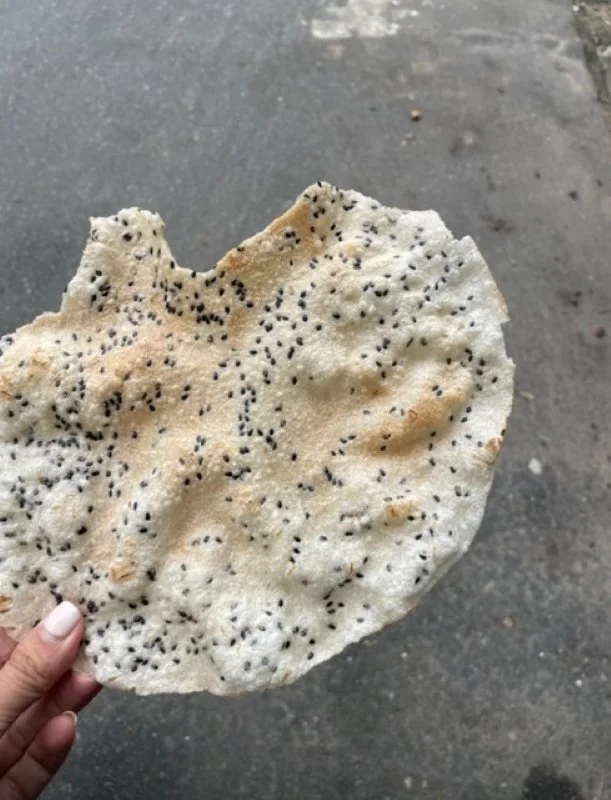
Tasty bánh tráng mè
The owners daughter said they produce about 500 of Bánh tráng mè a day and they are one of the few places that make it by hand in Danang. The method has gone to mass manufacturing to provide consistency and quantity for the increasing number of restaurants that are constantly popping up in Vietnam.
“Here, try one” I took the bánh tráng mè ever so gratefully and took my first crunchy bite, maybe it was because I had seen them made in front of me or my heart was full from the genuine conversation exchange, it was the best bánh tráng mè I had tasted.
We said our goodbyes and I turned to walk down the street, they continued to make that bánh tráng mè, like they have done for the past 20 years.
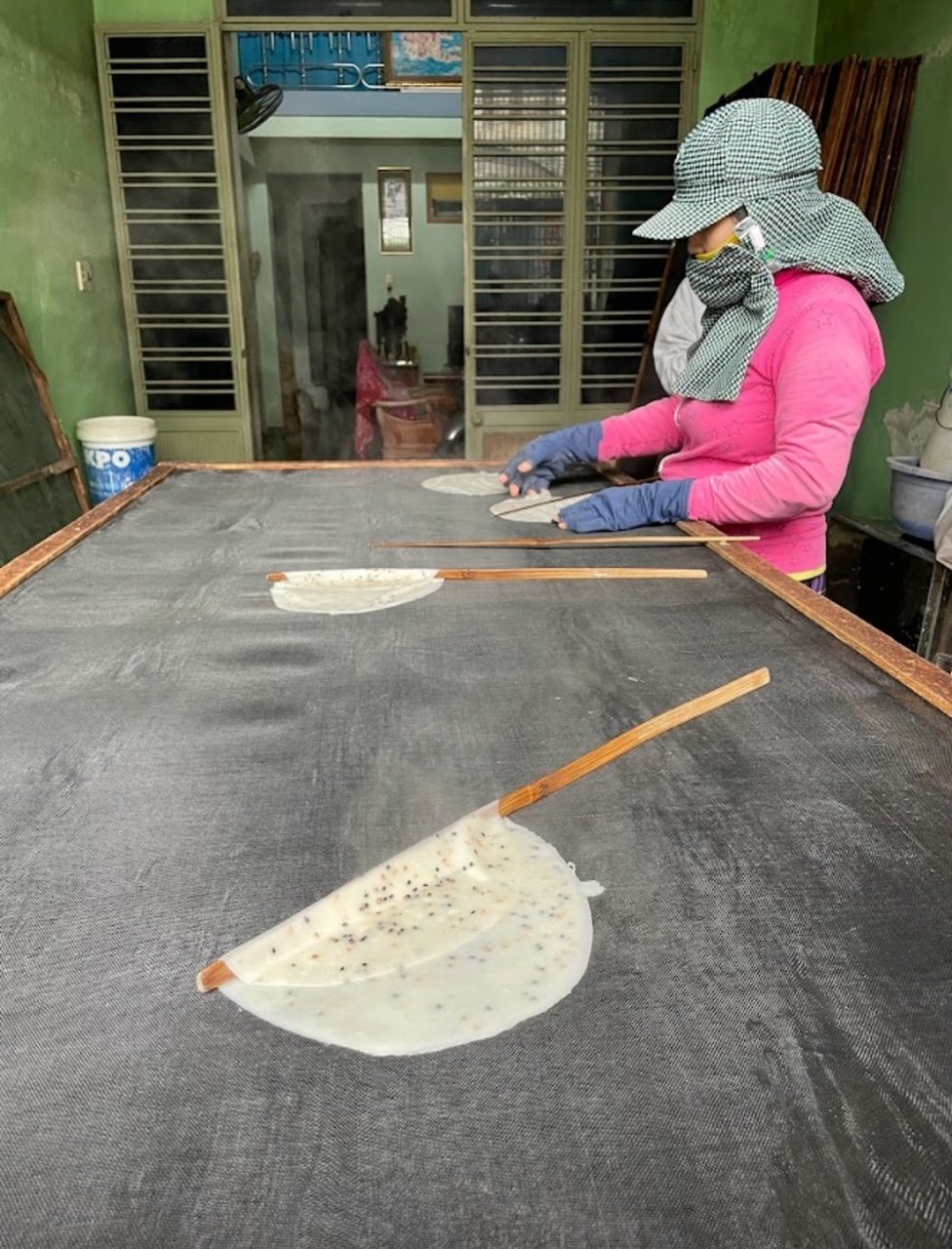
Laying out the recently steamed bánh tráng mè

Bánh tráng mè drying

Beyond Banh Mi
The image of a medium-sized baguette stuffed with pate, pork, pickled vegetables, and herbs springs to mind when one recalls the top dishes to eat in Vietnam. Stretching from the North to the South of Vietnam, Banh Mi is found on every street corner in any variation you could think of. But it goes way beyond the famous sandwich…..
The image of a medium-sized baguette stuffed with pate, pork, pickled vegetables, and herbs springs to mind when one recalls the top dishes to eat in Vietnam. Stretching from the North to the South of Vietnam, Banh Mi is found on every street corner in any variation you can think of.
However, the image of this well-known sandwich is not entirely incorrect relating to the name, the word bánh mì (or Banh My further in the north), can be translated to ‘wheat bread’. This crispy lightly browned oval-shaped loaf with a pillowy white interior is an integral part of the Vietnamese diet, yet this was not the case before the mid-1800s.
How bread became a staple in the Vietnamese Diet.
The French colonisation that began in the mid-17th century and expanded over the next 6 decades, coloured the pre-existing culture of Vietnam, initially forcefully, yet it has now become intertwined into the charm and vibrance the country emits through its architecture, fashion, religion, language a,nd most importantly, food.
During the vast amount of time that the French were in Vietnam up until the Geneva Accord in 1954, they brought a variety of cooking techniques and ingredients that changed the Vietnamese culinary landscape. Coffee, French-style pastries, pate, mayonnaise, cold cuts, and bread were among some of the food products that were consumed every day in Vietnam, initially by the more elite locals and eventually distributed into the everyday life of all Vietnamese.
What Makes Banh Mi so unique?
Bread was assimilated into the Vietnamese diet quite rapidly due to the accessibility of low-cost ingredients used to produce it. The French baguette that once was, slowly morphed into a Vietnamese baguette. The more traditional slower method of fermenting dough naturally was hastened with the use of yeast, reducing preparation time, and changing the structure of the bread resulting in a thin golden crispy crust enveloping a fluffy interior.
This is the Banh Mi as we know it today and has become an integral part of many of Vietnam’s dishes.
BO KHO
A dish originating in the south of Vietnam, Bò kho, directly translated to ‘beef stew’ is a mixture of warm spices, vegetables, tomatoes, and beef that has a unique taste that slightly varies in different regions around the country. The word Kho describes the braising technique used to make this dish which is traditionally made in a clay pot.
The base protein of Bo Kho is selected prime cuts of beef such as brisket and shank, which play a crucial role in the dish’s overall flavour and texture. Through the gradual breakdown of connective tissues, these beef cuts contribute to a tender and ‘pull-apart’ texture when cooked.
Bo Kho holds strong similarities to the French dish Pot-au-feu, yet the warm spices of cinnamon and cloves combined with ginger, lemongrass, and nuoc mam make it a unique Southeast Asian dish. Onions, carrots, and tomatoes are included in the dish imparting a slight sweetness. Bo Kho can be served with rice noodles, yet it is commonly eaten with a Banh Mi or two on the side, topped with fresh crisp herbs, beansprouts, and of course, some extra chilli.

BO KHO. Credit @www.cooking-therapy.com
CA RI GA
Chicken curry is a dish that is common in many countries around the world, yet each variation is different depending on the method, ingredients used, and the historical influences of a dish.
Ca Ri Ga in Vietnam is no exception, reflecting southern Indian flavours of turmeric, cumin, cardamom, cumin, and a hint of chilli. The Tamil culture had a strong impact on Vietnamese food and culture during the colonial period when the French colonies of Pondicherry immigrated to the south of Vietnam. During this time, they established a variety of trade businesses and also contributed to the finance and education sector. Despite the diminished presence of the Tamils over time, the influence is still found in dishes like Ca Ri Ga.
The bone-in chicken is marinated with dry spices and simmered in a coconut-based sauce, alongside lemongrass, sugar, and fish sauce. Sweet root vegetables such as carrots and potatoes are added for texture, and most importantly, Ca Ri Ga is served with Banh Mi, an essential element to soak up every bit of the thick, sweet, and savoury sauce.

Banh Mi Chao
BANH MI CHAO
A sizzling plate of fried eggs, luncheon meat, pate, mayonnaise, pickled daikon, and carrot is not complete without a side of Banh Mi.
This simple and delicious plate of eggs, herbs and meat is a popular breakfast dish, sometimes known as Banh Mi Op La. Undoubtedly another dish influenced by the French quite possibly from ‘oeufs au plat’, meaning sunny-side-up eggs.
It is both the experience and the ingredients in Banh Mi Chao that makes it so unique. When your made-to-order breakfast arrives at the table, it anticipates a good squirt of soy sauce and chilli sauce before dunking a crusty banh mi to soak up the rich fatty goodness.
From a French crusty baguette import to a softer, airy Vietnamese baguette, Banh Mi is as much of a staple to the Vietnamese diet as rice and noodles. Not only as an accompaniment to dishes but as a meal (banh mi sandwich) or a sweet treat (banh mi with condensed milk), Banh Mi is a result of a small part of the evolution of Vietnam’s culinary history.