
explore the world through the universal language of food
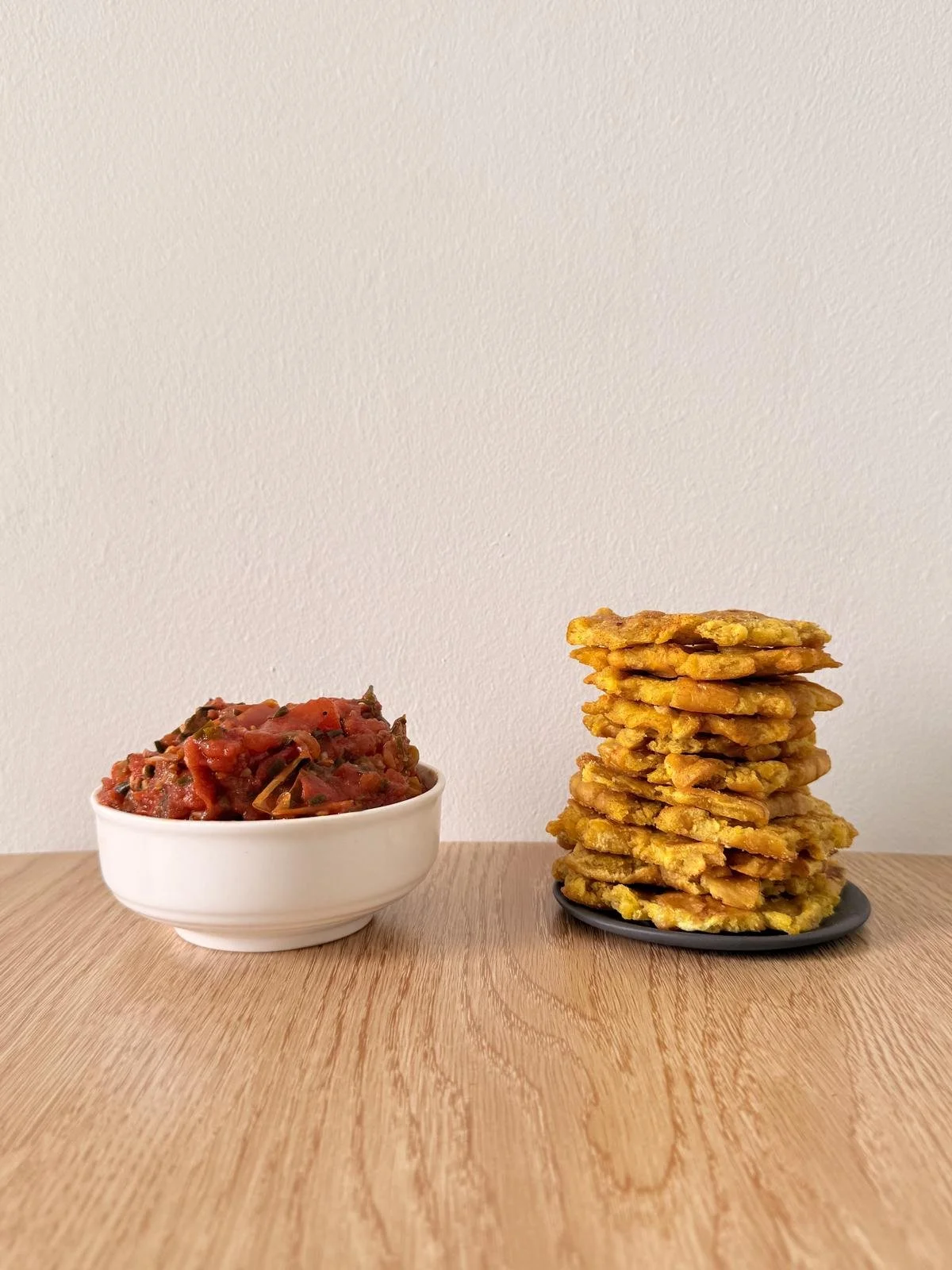
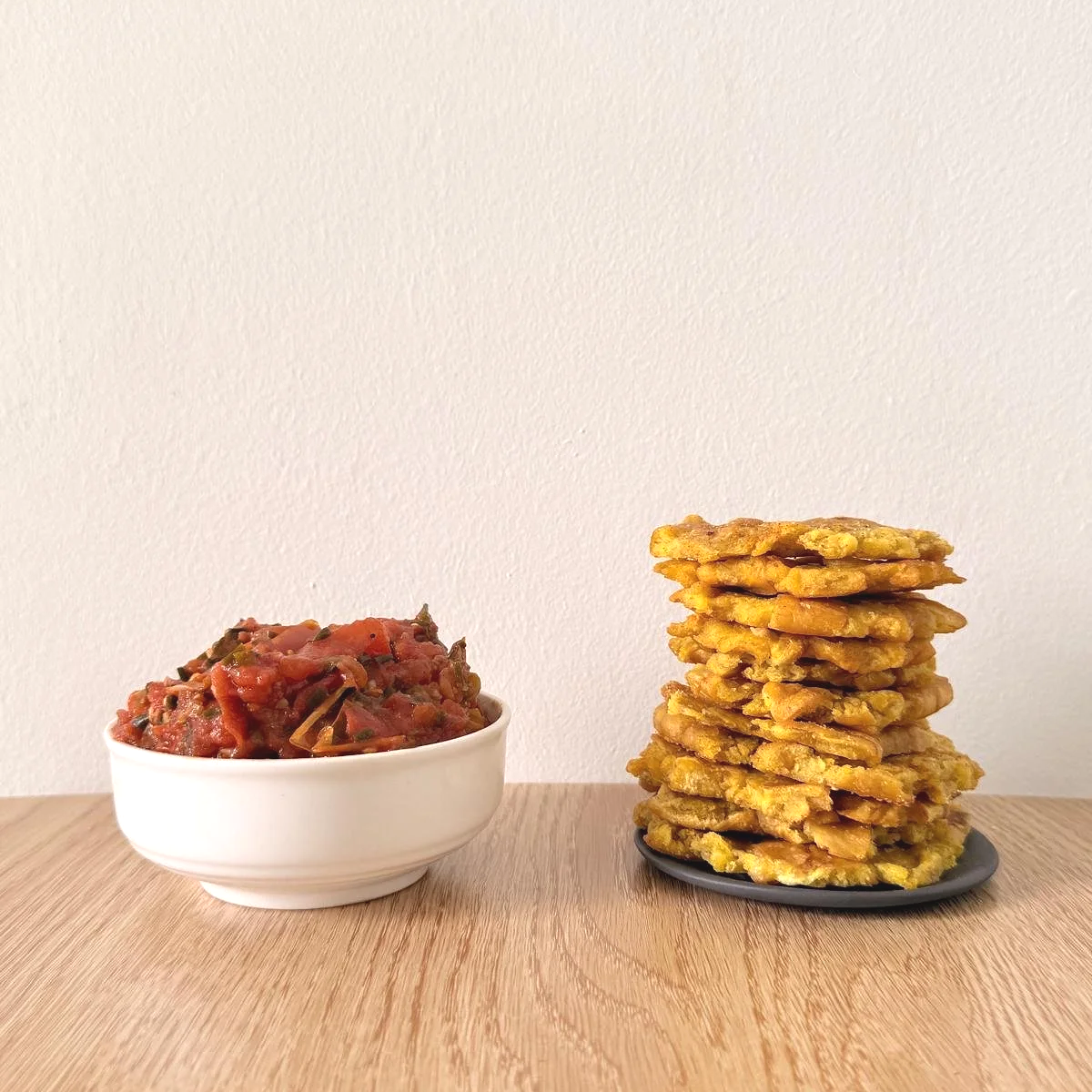
Hogao y Patacones
The Recipe
Serves: 5-6 people
Preparation: 30-40 minutes
Assembly Time: 10 minutes
“A simple but delicious combination that crosses Indigenous traditions and Spanish Colonial ingredients”
This is an unapologetically simple dish focusing on produce with big flavour, and humble preparation - the philosophy that sits at the heart of Colombian cooking.
I guess you could liken hogao to sofrito, which can be found in many variations across Latin America and Europe, yet hogao is distinctively Colombian, in both flavour and purpose.
The base of this dish, tomatoes and onions, became a staple in Colombian kitchens after the Spanish colonisation, yet the sauce is slowly cooked over a low fire until it becomes jammy, an ode to traditional indigenous methods bringing out the best flavours in beautiful produce.
Patacones, ,made with green plantains, are an ode to Colombia’s tropical coast and reflect the influence of African culture on cuisine. Patacones are a staple and are served up alongside fish, soup, meat dishes and even rice.
Whether this dish is served as a snack or a side, the elements within this dish is a reflection of history and connection to the culture and people of Colombia.
INGREDIENTS
INGREDIENTS - HOGAO
500g fresh tomatoes
100g spring onions (finely sliced)
1 clove/8 g finely chopped garlic
1 tsp/6g toasted cumin, ground
1/2 tsp black pepper
1/4 tsp salt
1 red capsicum (if using), finely chopped
2-4 tbsp extra virgin olive oil
Small bunch of coriander as garnish
INGREDIENTS - PATACONES
800g green plantains
1 litre of vegetable oil (for frying)
METHOD
Over a medium heat, cook the spring onions in 2 tbsp. oil until soft, yet still green
Add in the chopped garlic and cook until fragrant
Chop the tomatoes, then add them with salt, pepper, and ground cumin
Add red capsicum here if using
Simmer down all ingredients until jammy, season more to taste
In a medium saucepan, pour in vegetable oil and allow the temperature to rise to about 180’C
Peel and cut plantains into half inch slices.
Fry them in oil and set aside on a paper towel or rack to remove the excess oil.
Place each piece on a chopping board or flat surface and squish with a cup, plate or tortilla press
Fry the plantains again until crispy, and lightly salt while still hot
Serve patacones with the jammy hogao, topped with coriander.
Ready to bake? Try some of these quick and easy recipes..

Browse my kitchen for a curated selection of ingredients, tools and books I use and love

MY KITCHEN


Chayote Salad with Vanilla Chipotle Dressing
The Recipe
Serves: 10 people
Preparation: 30 minutes
(+2 days)
Assembly Time: 10 minutes
“The chayote crop has archaeologically left very few trails behind, yet the word itself is present in the Otomanguean language (one of the oldest languages in Mesoamerica), and has the greatest number of genetic variations, pointing to its origins around the 12th Century in Southern Mexico.”
Growing up, I was served chayote for dinner, boiled until mushy with a dollop of butter and it was not the tastiest. After living in Mexico, I learnt how important this squash was in Latin America, and the history of its origins runs deep in the region. Chayote is a pear-shaped fruit that is coloured from pale green to emerald and is an extremely diverse ingredient that can be used to make both savoury and sweet dishes.
The chayote crop has left very few traces archaeologically, yet the word itself is present in the Otomanguean language (one of the oldest languages in Mesoamerica), and has the greatest number of genetic variations, pointing to its origins in the 12th Century, Southern Mexico. With the inclusion of this linguistic and agricultural evidence, the Mayan agricultural systems of the 8th Century also show cultivation of similar crops grown in the same way as chayote.
The chayote moved towards the United States in the 18th Century, and then it journeyed towards Europe and Asia. Today, it is heavily cultivated in China and Southeast Asia.
From leaves to roots, to shoots to fruit (whoa, that rhymes), almost all of the chayote plant is edible, and it is highly nutritious, full of fibre, minerals and vitamins, as well as having antioxidant properties.
Whether it is boiled in Caldo de res (Mexico), sauteed with garlic and onion in Chucho refogado (Brazil), or grilled and made into a simple salad such as mine, it gives texture, takes on flavour and is a wonderfully diverse ingredient found in cuisines all around the world.
Below is my chayote salad, it’s super simple so you must try it!
The only key point to this salad is not to overcook the chayote as they will be too mushy to grill.
Enjoy the process and let me know how you go.
INGREDIENTS
INGREDIENTS
400g dried pinto beans (soaked overnight and boiled until cooked)
or 1 can of cooked pinto beans
1 kg chayote, peeled and halved
1kg beetroot
200mls of good ginger beer
40g blended chipotle paste
16g good vanilla extract
100g red wine vinegar
40g caster sugar
10g fine sea salt
110g extra virgin olive oil
coriander and lime to garnish
METHOD
The beetroot needs to be prepared 2 days in advance.
Peel beetroot and slice into 8mm thick slices
Place flat in a bag and pour in ginger beer.
Seal and allow to sit in the fridge for a minimum of 2 daysOnce the beetroot is marinated and cured, cut the beetroot into 1 cm cubes
Peel and halve chayote (it is good to wear gloves as chayote can be quite sticky)
Place chayote in water and bring to a boil (approximately 15 minutes)
Take out chayote and drain completely, chill to firm up
De-seed and take out the coreSprinkle salt and oil on the chayote and grill both sides until nice char marks form. Slice chayote into 5mm thick pieces.
For the dressing, combine chipotle paste, olive oil, sugar, sea salt, red wine and vinegar, set aside
To assemble, simply toss the prepared beetroot, beans, grilled chayote and mix in the dressing.
You can follow the below proportions for a small side salad.
50g beetroot, chopped into 1 cm cubes80g chayote, chopped into half moons
80g pinto beans
30g chipotle dressing
3g coriander
Top with a lime wedge - ENJOY!
Ready to bake? Try some of these quick and easy recipes..
Browse my kitchen for a curated selection of ingredients, tools and books I use and love
MY KITCHEN