
explore the world through the universal language of food

Chayote Salad with Vanilla Chipotle Dressing
The Recipe
Serves: 10 people
Preparation: 30 minutes
(+2 days)
Assembly Time: 10 minutes
“The chayote crop has archaeologically left very few trails behind, yet the word itself is present in the Otomanguean language (one of the oldest languages in Mesoamerica), and has the greatest number of genetic variations, pointing to its origins around the 12th Century in Southern Mexico.”
Growing up, I was served chayote for dinner, boiled until mushy with a dollop of butter and it was not the tastiest. After living in Mexico, I learnt how important this squash was in Latin America, and the history of its origins runs deep in the region. Chayote is a pear-shaped fruit that is coloured from pale green to emerald and is an extremely diverse ingredient that can be used to make both savoury and sweet dishes.
The chayote crop has left very few traces archaeologically, yet the word itself is present in the Otomanguean language (one of the oldest languages in Mesoamerica), and has the greatest number of genetic variations, pointing to its origins in the 12th Century, Southern Mexico. With the inclusion of this linguistic and agricultural evidence, the Mayan agricultural systems of the 8th Century also show cultivation of similar crops grown in the same way as chayote.
The chayote moved towards the United States in the 18th Century, and then it journeyed towards Europe and Asia. Today, it is heavily cultivated in China and Southeast Asia.
From leaves to roots, to shoots to fruit (whoa, that rhymes), almost all of the chayote plant is edible, and it is highly nutritious, full of fibre, minerals and vitamins, as well as having antioxidant properties.
Whether it is boiled in Caldo de res (Mexico), sauteed with garlic and onion in Chucho refogado (Brazil), or grilled and made into a simple salad such as mine, it gives texture, takes on flavour and is a wonderfully diverse ingredient found in cuisines all around the world.
Below is my chayote salad, it’s super simple so you must try it!
The only key point to this salad is not to overcook the chayote as they will be too mushy to grill.
Enjoy the process and let me know how you go.
INGREDIENTS
INGREDIENTS
400g dried pinto beans (soaked overnight and boiled until cooked)
or 1 can of cooked pinto beans
1 kg chayote, peeled and halved
1kg beetroot
200mls of good ginger beer
40g blended chipotle paste
16g good vanilla extract
100g red wine vinegar
40g caster sugar
10g fine sea salt
110g extra virgin olive oil
coriander and lime to garnish
METHOD
The beetroot needs to be prepared 2 days in advance.
Peel beetroot and slice into 8mm thick slices
Place flat in a bag and pour in ginger beer.
Seal and allow to sit in the fridge for a minimum of 2 daysOnce the beetroot is marinated and cured, cut the beetroot into 1 cm cubes
Peel and halve chayote (it is good to wear gloves as chayote can be quite sticky)
Place chayote in water and bring to a boil (approximately 15 minutes)
Take out chayote and drain completely, chill to firm up
De-seed and take out the coreSprinkle salt and oil on the chayote and grill both sides until nice char marks form. Slice chayote into 5mm thick pieces.
For the dressing, combine chipotle paste, olive oil, sugar, sea salt, red wine and vinegar, set aside
To assemble, simply toss the prepared beetroot, beans, grilled chayote and mix in the dressing.
You can follow the below proportions for a small side salad.
50g beetroot, chopped into 1 cm cubes80g chayote, chopped into half moons
80g pinto beans
30g chipotle dressing
3g coriander
Top with a lime wedge - ENJOY!
Ready to bake? Try some of these quick and easy recipes..

Browse my kitchen for a curated selection of ingredients, tools and books I use and love

MY KITCHEN


Jicama & Apple Salad
The Recipe
Serves: 2 people
Preparation: 10 minutes
Assembly Time:1 minute!
“From its glorious origins in Mexico, Central and South America, Jicama made the long journey to Asia in the 17th Century”
Amongst the plethora of street stalls in Mexico City, I remember the fruit carts that were neatly prepared, and too irresistible to walk past without purchasing a cup of jicama, mango, or papaya sprinkled with chilli, salt, and a squirt of juicy Mexican lime. This was not the first time I had eaten jicama, but it was the first time I had seen it served in this way – cut like thick fries and eaten raw.
Although Jicama looks like a root vegetable, it is the root of a pea plant (Fabaceae family) that spouts out from the top of it. The crispy and juicy Mexican turnip, Jicama (pronounced “Hee Ka Ma”) is derived from the Nahuatl word xīcamatl.
Where is Jicama from?
The origins of this vegetable lie in Mexico, Central and South America and it is known to be one of the oldest cultivated crops – even the Mayans munched on it back in the day. There have been traces of Jicama found in archaeological sites in Peru that date back around 3000 years.
Jicama most probably journeyed from the Americas to Asia with the help of the Spaniards. It is now a common ingredient found all over the world and is a popular element in dishes from popiah in Singapore to rojak in Indonesia.
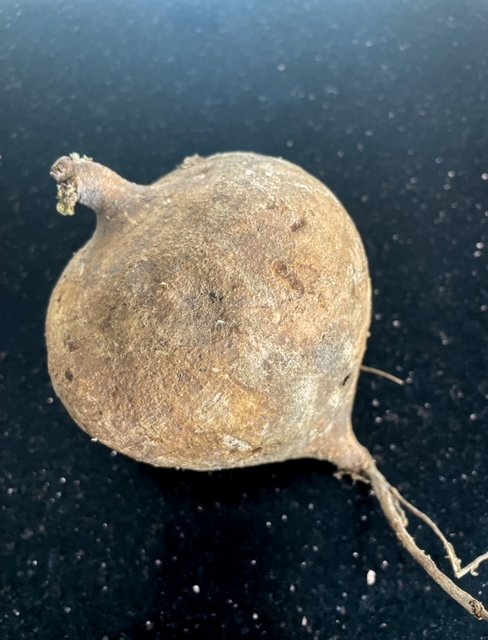
What does Jicama Look Like?
With a rustic exterior, Jicama has fibrous skin yet a fleshy interior. It is made up of around 90% water and it has a glorious ability to absorb flavours ever so well.
What does Jicama Taste Like?
If you haven’t tried jicama, you will be pleasantly surprised. With its deceiving root vegetable costume, it is not at all starchy, yet has a juicy texture similar to a nashi pear with a little bit more structure. It can be eaten raw or cooked and thrown into savoury and sweet dishes.
Enough of the history lesson, here’s the recipe.
INGREDIENTS
Salad
280g jicama
60g / half red apple
30g water celery or watercress (rocket works too!)
1 tbsp / 10g raisins
1 tbsp / 5g pumpkin seeds
Dressing
1.5 tbsp lime juice
½ tsp pepper
¼ tsp salt
2-3 tbsp extra virgin olive oil
1 tbsp habanero hot sauce (or any sauce you wish)
METHOD
Wash jicama, red apple, and water celery/watercress.
Trim the thick stalks of the water celery and save later for a veggie stock.
Peel jicama and cut into 1cm thick sticks
Keep the peel on the red apple and slice it a little thinner than the jicama
Mix the salt and pepper in the lime juice and mix until the salt has slightly dissolved, add in hot sauce and olive oil.
Mix until all dressing ingredients are combined.
Place the dressing, apple, and jicama in a bowl and mix to thoroughly coat them, allow to sit for a minute or two.
On a plate, place half the jicama/apple mixture and then add some of the water celery.
Pile the rest of the jicama and apple and then the watercress. Arrange as you wish!
From a reasonable height, flutter the pumpkin seeds and raisins down on the salad.
Add a small amount of the remaining dressing to finish.
Enjoy the crunchy and fresh simplicity of this healthy salad.
For extra oomph, feel free to add some crumbled fetta cheese.
Questions? Comments? Let me know, I’d love to hear from you.
Buen Provecho!
Try some mains to go with this Jicama Salad!


SOME OF MY FAVOURITE HOT SAUCES ON AMAZON


