
explore the world through the universal language of food
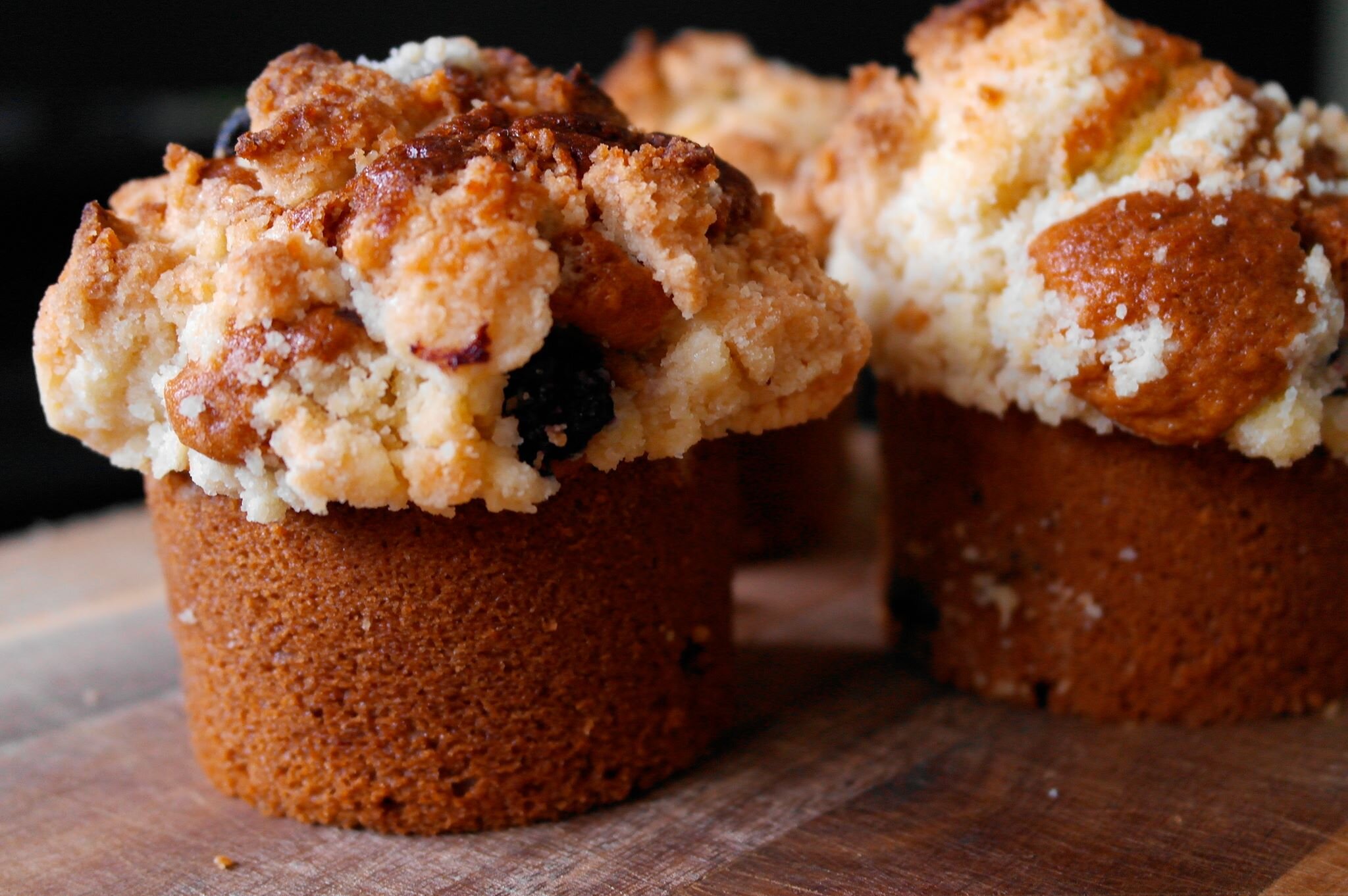
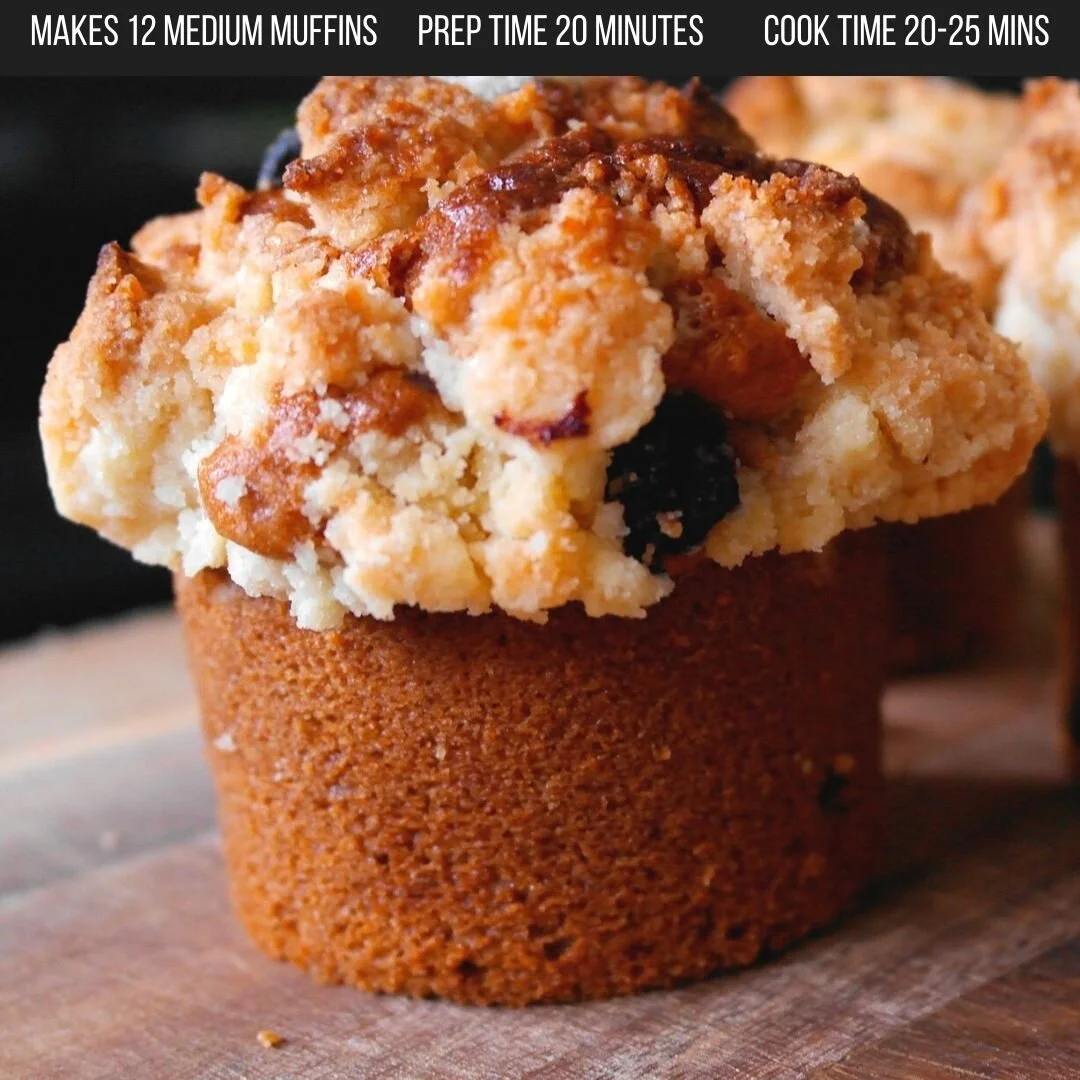
Blueberry Crumble Muffins
Muffins were developed around the end of the 18th Century. This is when pearlash, or potassium carbonate was adventurously added to a dough. The leavening agent added carbon dioxide gas to the dough, allowing it to rise considerably and resulted in a lighter cakey texture. Pearlash was actually exported to Europe in large quantities until baking powder was developed commercially around the 1860's.
Probably the easiest and most satisfying thing to bake - Muffins.
Muffins were developed around the end of the 18th Century. This is when pearlash, or potassium carbonate was adventurously added to a dough. The leavening agent added carbon dioxide gas to the dough, allowing it to rise considerably and resulted in a lighter cakey texture. Pearlash was actually exported to Europe in large quantities until baking powder was developed commercially around the 1860's.
So with that little history lesson - let's move on to the recipe and discover how easy it is to make these delicious blueberry muffins. Get dirty and mix with your hands (that's what baking is all about!) and always be in a happy mood when you bake - believe it or not, this affects the end result.
THE INGREDIENTS - CRUMBLE
125g plain unbleached white flour
60g unrefined caster sugar
60g cold unsalted butter, cut into cubes
a pinch of salt
THE METHOD - CRUMBLE
Combine all ingredients in a bowl and rub in the butter with your fingertips until a rough large bread crumb consistency. Refrigerate or freeze until ready to use.
THE INGREDIENTS - MUFFINS
115g unsalted butter (at room temperature)
240mls whole fresh milk
2 medium eggs
400g plain unbleached flour
1 tbsp. baking powder
200g unrefined caster sugar
250g fresh or frozen blueberries
pinch of fine sea salt
THE METHOD - MUFFINS
Preheat the oven to 180'C. Brush muffin tin with butter and dust lightly with plain flour. Turn the tin upside down to remove excess flour. Place the prepared muffin tin in the fridge until the batter is ready.
Put flour, salt, baking powder and sugar in a large mixing bowl
Add the cubed butter to the flour mix and rub in with your finger tips until you reach a fine bread crumb consistency.
In a small mixing bowl or jug, add milk and eggs. Stir until combined and then add to the flour/butter mix. Stir until just incorporated.
Lastly, add the blueberries and mix through until the fruit is evenly dispersed. Don't over mix your muffin batter as the end muffin result will be a dry hard muffin.
Spoon the mixture into the prepared muffin tin which should be nice and chilled. Fill the holes right to the top of the tin. When the muffins rise they will spill over and create a lovely muffin top.
Finally, add 2.5 tablespoons of the prepared crumble to the top of the wet muffin mix in the tins. Pack down lightly.
Bake for about 20-25 minutes (depending on the quality of your oven) until lovely and golden. Allow to cool slightly before turning them out onto a cooling rack.
Eat them fresh out of the oven with a good strong cup of coffee and you are ready to start your week!!!
Store in an airtight container for a few days or you can also freeze these muffins.
NOTE: you can make the crumble in advance and have it already frozen for when you have the urge to make crumble muffins or a basic fruit crumble. Add any fresh or frozen fruit to this recipe if you are not too partial to blueberries


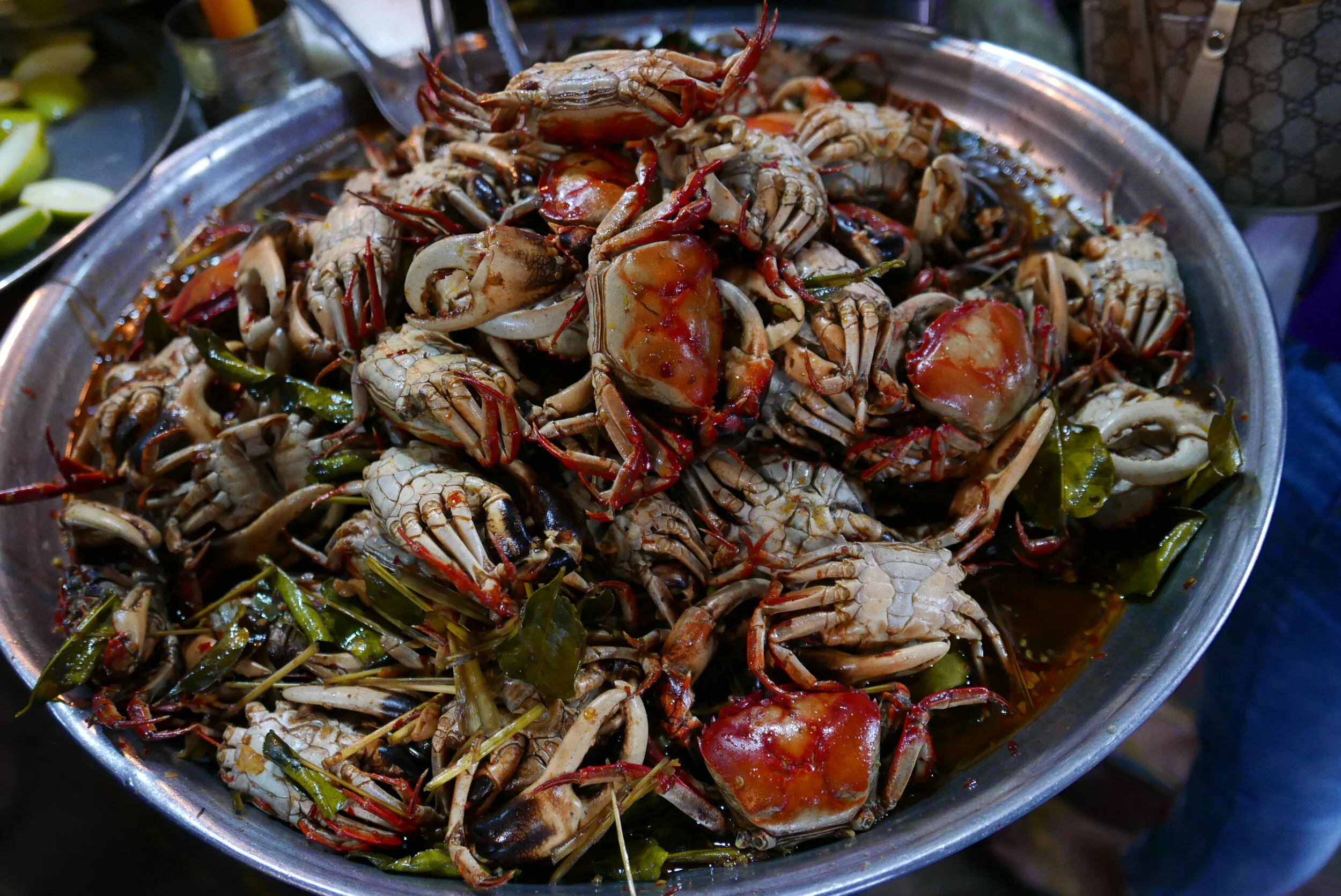
Cambodia - Scratching the surface of the country's food and culture
Honey, a wonderful golden liquid that has a composition of a complex mixture of sugars, water, vitamins, minerals, pollen and protein. It is made by these wonderful little black and yellow foragers known as bees, who collect nectar from flowers (or honeydew) near and far, store it in their honey stomachs (crops) and regurgitate it into the little vessels of the hive. The vessel is then fanned with their wings which leads to water being evaporated and the pure honey remaining.
Cambodia, one of the poorest countries in Southeast Asia is extremely rich in history which has influenced its Khmer cuisine. Almost all of it was lost during the communist regime, however, the essence of its past is still written in the food of today. It goes well beyond the fried bugs, and spiders on skewers at the tourist street food markets, although these food sources are definitely a sign of a resourceful and once starving nation.
The land of Cambodia is extremely rich and fertile where rice flourishes and is today one of Cambodia's most important exports. The Mekong river runs through the country to meet Tonle Sap - the largest freshwater lake within Southeast Asia, allowing freshwater fish and seafood to be extremely abundant.

Cambodia is also home to the largest religious monument in the world, Angkor Wat, taking a good 37 years to build and a complex of other religious temples surrounding it reflecting the cultural and spiritual wealth of the the Hindu-Buddhist Khmer Empire, who was prominent from the 9th - 15th Century.
Read the entire article HERE.
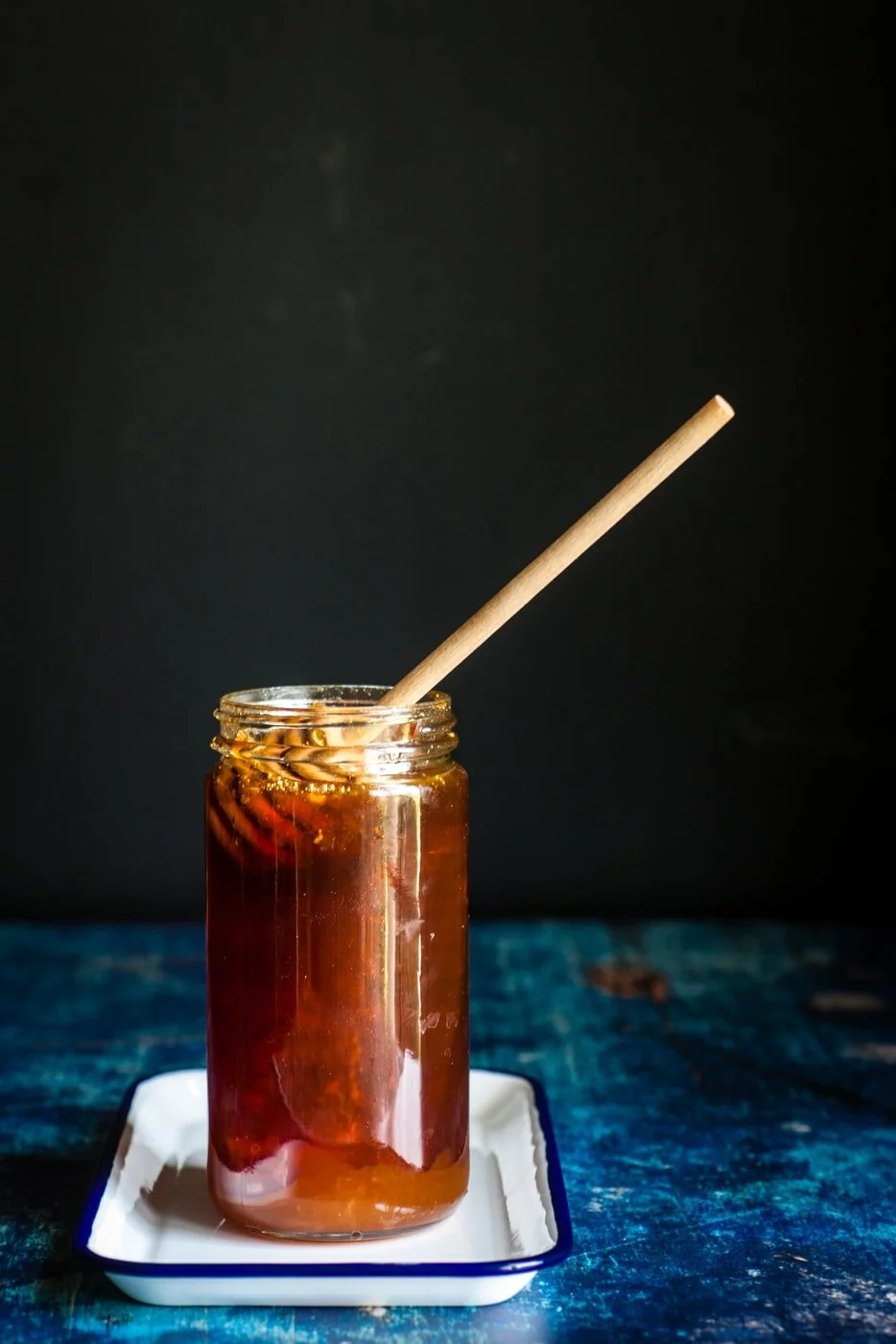
Honey - Nature's Liquid Gold
Honey, a wonderful golden liquid that has a composition of a complex mixture of sugars, water, vitamins, minerals, pollen and protein. It is made by these wonderful little black and yellow foragers known as bees, who collect nectar from flowers (or honeydew) near and far, store it in their honey stomachs (crops) and regurgitate it into the little vessels of the hive. The vessel is then fanned with their wings which leads to water being evaporated and the pure honey remaining.
Honey, a wonderful golden liquid that has a composition of a complex mixture of sugars, water, vitamins, minerals, pollen and protein. It is made by these wonderful little black and yellow foragers known as bees, who collect nectar from flowers (or honeydew) near and far, store it in their honey stomachs (crops) and regurgitate it into the little vessels of the hive. The vessel is then fanned with their wings which leads to water being evaporated and the pure honey remaining.
Bees have been going about their business for more than 100 million years according to fossil evidence of these little creatures that have been preserved in resin. Cave paintings in Spain dating back 8,000 years ago show that humans have relied on bees by raiding their nests and collecting the sweet liquid they produce. The earliest evidence of beekeeping was in Ancient Egypt where hives made of clay from the Nile were placed on rafts that travelled up and down the river depending on the season.
Honey bees, honey and wax were a part of everyday life in the ancient world. The application of honeybees’ by-products was used for culinary purposes, spiritual and religious rituals, embalming, medicinal treatments and even as a currency.

Credit @heather_gill
Honey is classified according to the floral source (monofloral, polyfloral, blend) and by region or country. It can be bought in both its raw form and pasteurized form. Raw honey comes straight from the honeycomb, is mashed and filtered to remove the honeycomb and other debris. Honey in its raw state is unadulterated, containing beneficial health and medicinal properties due to the pollen, propolis, antioxidants, natural vitamins and minerals present. When honey is pasteurized, it results in a smooth clearer liquid and while it is aesthetically pleasing, will contain a loss of vitamins, essential nutrients and minerals.
When choosing honey, it is important to seek out the genuine product, making sure it is pure and contains no added corn syrup, sugarcane or additives.
Honey is such a versatile ingredient and can be used in both sweet and savoury dishes, an additive to drinks, marinades, dressings and even as natural medicine. I’ve used it to make a show-stopping layered cake that can be made a day in advance. It’s known as the Medovik Torte or Russian Honey cake. You can try the recipe HERE.