
explore the world through the universal language of food

Why are Poppy Seeds Banned?
The poppy seed is such an undervalued culinary ingredient in many countries, and disappointingly, in some regions of the world, these earthy balls of crunchiness are even banned. The history of poppy seeds and the plant they are derived from have an extremely coloured history of medical breakthroughs, war, and addiction.
The poppy seed is such an undervalued culinary ingredient in many countries, and disappointingly, in some regions of the world, these earthy balls of crunchiness are even banned. The history of poppy seeds and the plant they are derived from have an extremely coloured history of medical breakthroughs, war, and addiction.
Where is the poppy seed plant from?
Poppy seeds are only found in the opium poppy plant, known as Papaver Somniferum which originated in Anatolia dating back around 5000 BC.
The first known cultivation of this plant and its uses as a ‘joy plant’ was recorded in 3500 BC in cuneiform clay by Sumerians, the world’s first civilization. There is also evidence of opium poppy remnants found in ancient sites in northwestern Europe and the Alps. The opium poppy plant and its uses ranged from a food source or spice to a sedative, and pain suppressant as well as used for spiritual and religious rituals.
The Greek botanist and physician, Pedanius Dioscórides, who served in the Roman army mentions the use of the opium plant in De Materia Medica, a collection of works that cite around 600 plants and natural medicinal properties that could be derived from them.
The seeds of the opium poppy plant are usually cleaned and processed before being sold as a culinary ingredient, yet they may still contain a slight opiate residue which can show up as positive in a drug test. Poppy seeds should be available for all to enjoy as they are rich in antioxidants and minerals as well as other benefits.

Opium Poppies
What is Opium?
Opium is derived from the seed capsules of the opium poppy plant. It was first hand harvested by splitting the pod of the plant so the milky latex would seep out and dry. This dried liquid is then used as a base to make a variety of drugs and this was quite prevalent in the 1800s when it was used as a pain killer. The latex of opium contains around 12% morphine, codeine and other alkaloids.
The ancient societies of Greece and Egypt used opium as a sedative, pain reliever, anesthesia, and also recreationally. Opium became a highly sort after commodity that was traded in the 6th-7th Century BC by Arabs along the silk road, a network of trade routes connecting Europe, Asia, India, and China.
In the 1600s, tobacco smoking in China became popular and so too, did smoking opium which started a huge addiction for many throughout the country, causing a ban on the use and sale of it in the 16th Century. Despite the ban, opium and its uses still flourished.
Throughout the Western world, opium was used medicinally as a pain reliever and a cure for those afflicted by mental illness. Opium as a prescription began around the 1600s in the United States and it wasn’t until the late 1800’s that it was recognized as an addictive drug, despite its’ known recreational uses in the 14th Century.
The Opium War

An Opium Den @poppies.org
By the 1700s, the British East India Company began trading with China for tea, porcelain, and silk in return for British silver. This trade wasn’t extremely profitable so with their connections with opium growers in India, they began smuggling opium into China which was sold for silver, and that silver was then used to pay for the tea.
The addiction to opium in China grew rapidly and had detrimental side effects on the country’s economy and social structure. The Chinese government intended to put an end to this trade that was affecting their country by destroying and confiscating over 1,000 tons of opium being held in Canton by British merchants. This forceful action by the Chinese government was the onset of a series of events that would lead to the Opium War of 1839 and the subsequent second war in 1856.
China’s reputation as the largest economy in the 1820s was reduced by half by the end of the two wars, with the first war leading to the British having access to five major trading ports and control over Hong Kong. The second Opium war saw Britain and France join forces to legalise the trade of Opium.
Growth and consumption of opium were banned in China in the early 1900s which led to its decline in trade in less than 20 years. The use of opium spread through the United States during the gold rush of the mid-1800s when the Chinese worked to seek money. Smoking dens of the drug heightened fears of encouraging prostitution and the increase in crimes, this in turn issued a discriminatory ban on Chinese immigrants from 1882-1892.
Early trade conventions of the 1900s led to the complete ban on opium and China’s defeat of Japan in WWII was the beginning of the People’s Republic of China and the total eradication of opium in 1949.
Opium is still used today in the medical world in the form of morphine or codeine, both derived from opiates, yet used in a heavily regulated manner in the medical world. Heroin was developed in the 1870s as a milder alternative to morphine to relieve pain and it was also used as a cough suppressant. The use of heroin grew into addiction among many in the United States.
How did we end up here?
From poppy seeds to opium poppy plants, to war to heroin……
Believe it or not, I was inspired to create a recipe after this research using poppy seeds as a paste filling for a wonderful traditional Jewish pastry known as Hamantaschen.
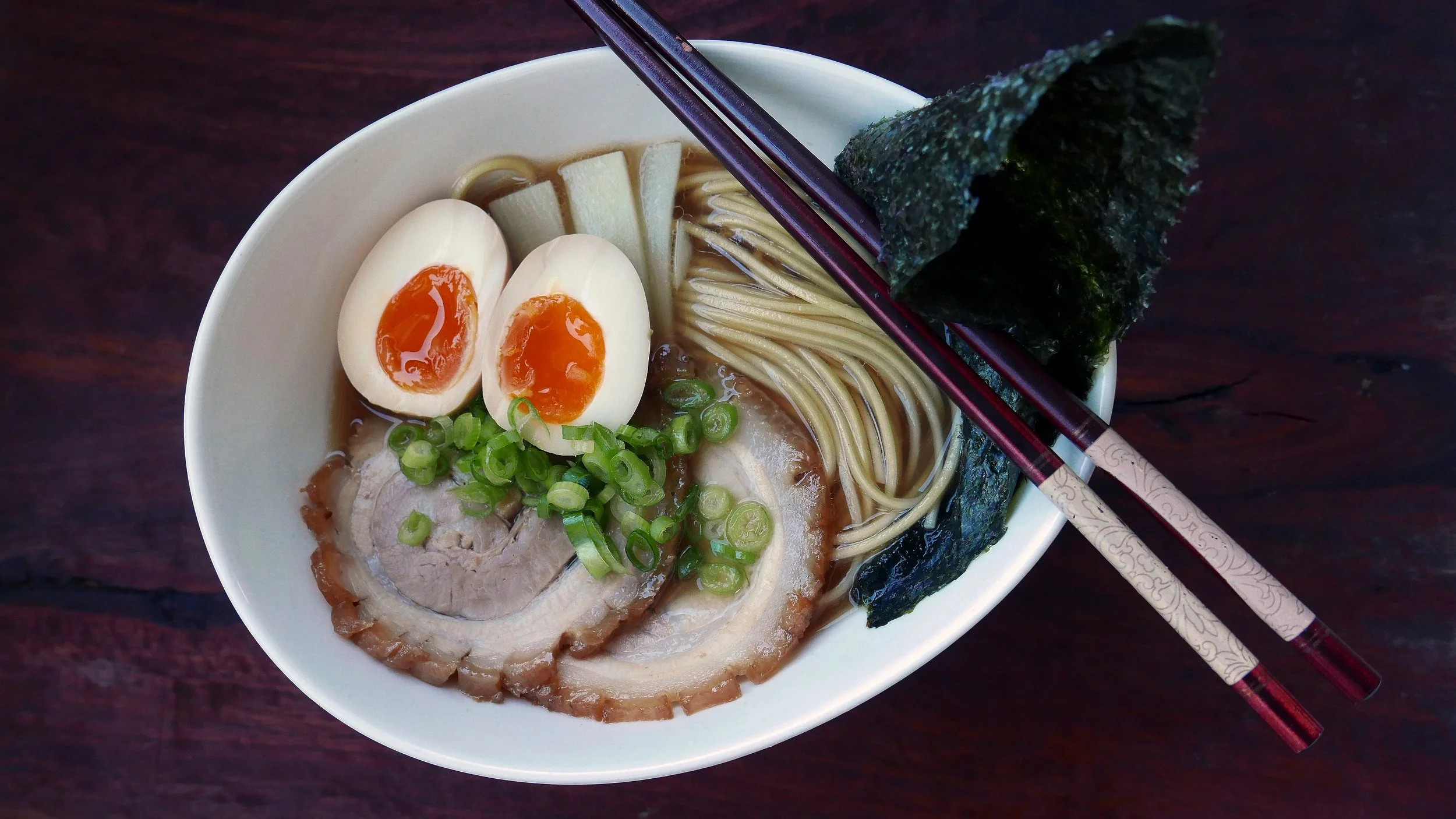
Ramen.... a brief history
Throughout Asia, noodle dishes are one of the most popular to eat and come in varying types of textures, ingredients used, serving, and cooking methods. While each country prides itself on a significant noodle dish, one of the most recognised types of noodles within both the region and Internationally is ramen. Ramen is a humble dish of wheat noodles, broth, toppings and is synonymous with Japanese food and culture, developing over the years with the evolution of Japan.
Throughout Asia, noodle dishes are one of the most popular to eat and come in varying types of textures, ingredients used, serving, and cooking methods. While each country prides itself on a significant noodle dish, one of the most recognised types of noodles within both the region and Internationally is ramen. Ramen is a humble dish of wheat noodles, broth, toppings and is synonymous with Japanese food and culture, developing over the years with the evolution of Japan.
Japan’s surrounding countries have strongly influenced its food culture starting from as early as 300BC. The Chinese have influenced a diet of rice and noodles within the Japanese culture and the introduction of Buddhism from Korea eventuated into a 1200 year ban on beef products, equipping the country to master the art of sushi and be world-renowned for its high-quality seafood.
The treaty of peace and amity in 1854 forced Japan to open its ports to American trade, ushering in a plethora of immigrants and foreign workers into the country. Yokohama, once a tiny fishing village, boomed because of the treaty and grew immensely with the rise of Industrialisation in 1868.
The first Chinese restaurant opened in Yokohama in 1870 and as Japan’s economy grew, many more Chinese students and workers migrated and spread around the country. Rairaiken , a restaurant in the Asakusa district of Tokyo, opened in 1910
In the Asakusa district of Tokyo, a restaurant run by Chinese workers opened in 1910 and served a dish called Shina Soba (Chinese Soba). This dish consisted of broth, noodles, pork, fishcake and nori, closely resembling ramen of what we know of today.
The word ramen relates to the actual noodles, transcribed into Japanese from the Chinese word ‘la mian’, meaning pulled noodle. Lamian noodles are from Lanzhou, made from wheat flour that is pulled, folded and stretched until the correct thickness is achieved.

Shina Soba
Credit: fukuokanow.com
Despite hiding behind a façade of a humble bowl of soupy noodles, the elements of ramen are complex, time-consuming and require extreme perfection to achieve a delicious, balanced dish. Those elements comprise broth, tare, noodles and toppings.
Broth
Traditionally ramen is made with a pork broth which requires many hours of simmering pork bones to extract collagen, fat and flavour. The combination of both pork and chicken broth is also popular and in modern style ramens, crab, prawn and lobster stock is also used.
Tare
The flavour of ramen can be credited to tare, the seasoning element of the broth containing glutamate through umami rich foods or the addition of monosodium glutamate. Dashi, made with kombu (kelp), katsuboshi (smoked and dried bonito flakes) OR niboshi (anchovy), is also used in the tare to add a full flavoured layer of umami.
Shio (salt), Shoyu (soy sauce) and Miso (fermented bean paste) are the building blocks on which the three types of tare is built. Other ingredients can be simmered with these base flavours such as sake, ginger, mirin, vinegar, garlic or green onions. Shio tare results in a clean and pure taste, Shoyu adds sweetness and colour while miso provides an earthy taste with an opaque appearance.

Credit @Julianamalta
Noodles
Ramen noodles come in a variety of textures and shapes and are made simply from wheat flour, salt, water and alkalized mineral water also known as kansui. Kansui is the essential ingredient in the noodle allowing them to have a bouncy texture and egg-like flavour. The colour and texture depends on how much kansui has been added to the dough and the noodles can be flat, wavy, curly, thick or thin.
Toppings
Toppings of ramen vary and can include chashu (grilled braised pork belly), ajitsuke tamago (marinated egg), Naruto (fish cakes), Nori (seaweed paper), bean sprouts, corn, menma (fermented bamboo shoots), black fungus, corn, spicy miso and many more.
I made a ramen stock with a kilo of pigs trotters, tare and dashi from scratch to learn the entire process, but I wouldn’t put you through that!!!
Here’s a quick ramen you can do with either roasted chicken or roasted pork.
The essential part of ramen.
THE RECIPE
Serves 4
Preparation Time: 20 minutes + 2days marinating (eggs)
Cooking Time: 25 minutes
Ajitsuke Tamago
4 medium eggs
60mls soy sauce
60mls mirin
100-120 mls water
Method
Bring water to a rolling boil
Drop in eggs and reduce the water to a simmer for about 7 mins, move the eggs around the saucepan
When the timer is done, place the eggs into an ice bath to stop the cooking process immediately.
Peel the eggs and place them in a sealed bag with the liquid. Allow to marinate for a minimum 2 days
Ramen Stock
1.5L chicken stock or pork stock (low or no salt)
30mls mirin
30mls sake
60mls soy sauce
60 mls dashi stock*
½ tsp rice wine vinegar
½ tsp brown sugar
1 clove garlic, peeled
thumb size piece of ginger, peeled
10g spring onion, roughly chopped
*if you cannot get your hands on kombu or dashi, try 30g of dried shiitake mushrooms
400g ramen noodles (if you can find the alkalized noodles and not the instant ones!)
Method – stock & noodles
Add all the ingredients into a large pot, bring to a light boil then reduce to a simmer. Allow to simmer for 20-30 minutes, fine strain twice before serving. Taste and season accordingly.
Bring a medium sized pot of water to the boil, add in ramen.
Cook until al dente and strain out the strain out the noodles
To Serve
In large warmed bowls, ladle in the ramen stock and the cooked noodles
Top with roasted meat, ajitsuke tamago, bamboo, spring onions and a sheet of nori

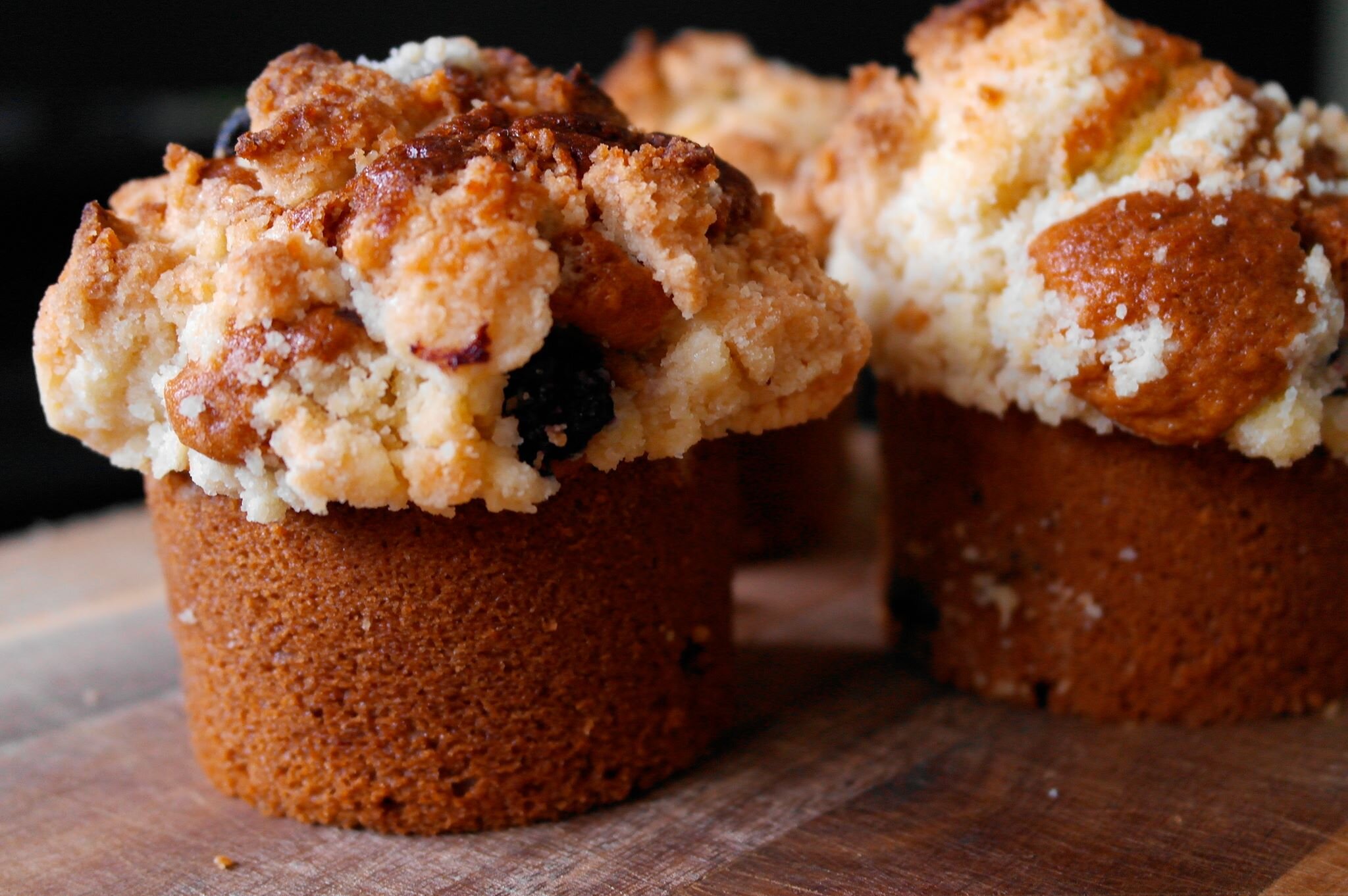
Blueberry Crumble Muffins
Muffins were developed around the end of the 18th Century. This is when pearlash, or potassium carbonate was adventurously added to a dough. The leavening agent added carbon dioxide gas to the dough, allowing it to rise considerably and resulted in a lighter cakey texture. Pearlash was actually exported to Europe in large quantities until baking powder was developed commercially around the 1860's.
Probably the easiest and most satisfying thing to bake - Muffins.
Muffins were developed around the end of the 18th Century. This is when pearlash, or potassium carbonate was adventurously added to a dough. The leavening agent added carbon dioxide gas to the dough, allowing it to rise considerably and resulted in a lighter cakey texture. Pearlash was actually exported to Europe in large quantities until baking powder was developed commercially around the 1860's.
So with that little history lesson - let's move on to the recipe and discover how easy it is to make these delicious blueberry muffins. Get dirty and mix with your hands (that's what baking is all about!) and always be in a happy mood when you bake - believe it or not, this affects the end result.
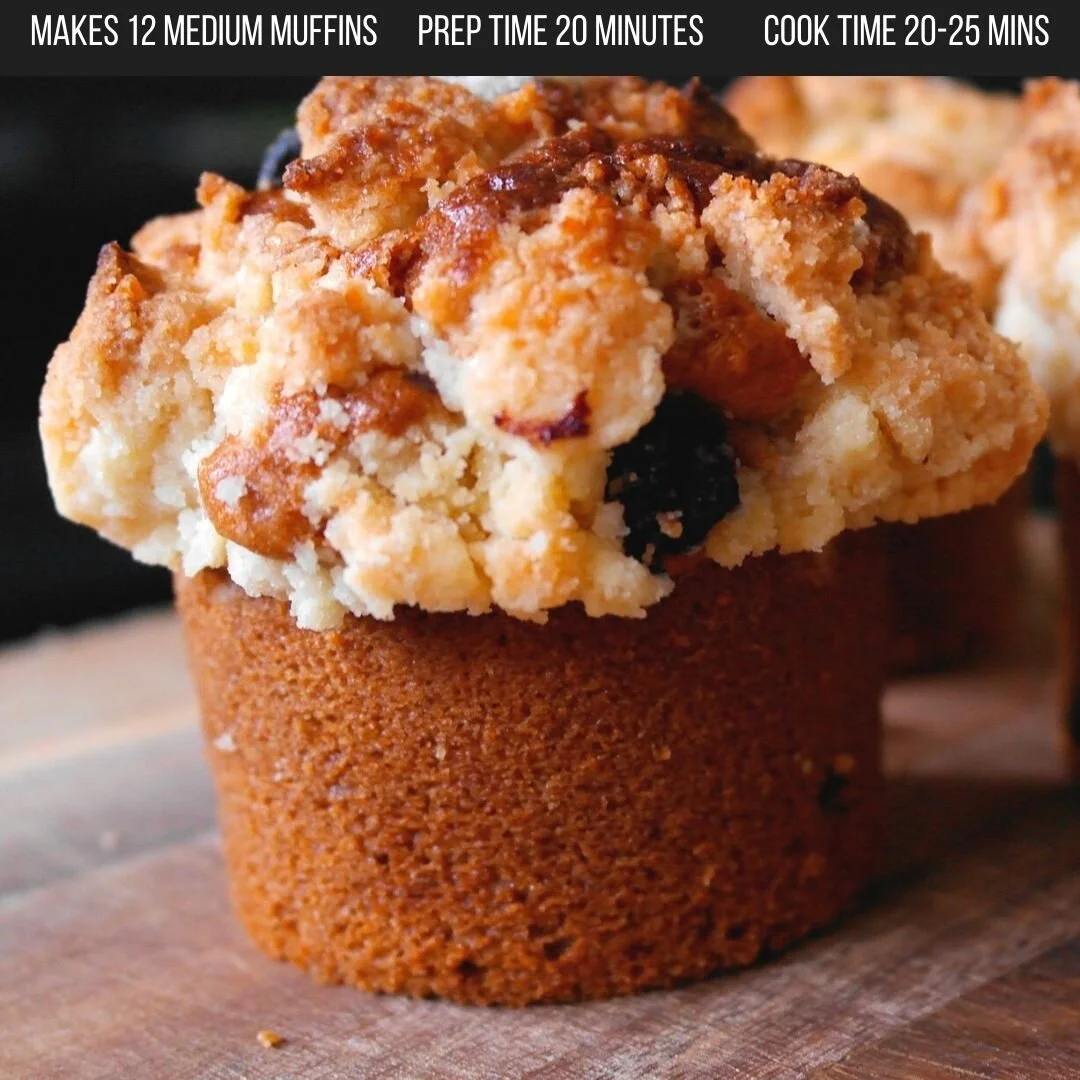
THE INGREDIENTS - CRUMBLE
125g plain unbleached white flour
60g unrefined caster sugar
60g cold unsalted butter, cut into cubes
a pinch of salt
THE METHOD - CRUMBLE
Combine all ingredients in a bowl and rub in the butter with your fingertips until a rough large bread crumb consistency. Refrigerate or freeze until ready to use.
THE INGREDIENTS - MUFFINS
115g unsalted butter (at room temperature)
240mls whole fresh milk
2 medium eggs
400g plain unbleached flour
1 tbsp. baking powder
200g unrefined caster sugar
250g fresh or frozen blueberries
pinch of fine sea salt
THE METHOD - MUFFINS
Preheat the oven to 180'C. Brush muffin tin with butter and dust lightly with plain flour. Turn the tin upside down to remove excess flour. Place the prepared muffin tin in the fridge until the batter is ready.
Put flour, salt, baking powder and sugar in a large mixing bowl
Add the cubed butter to the flour mix and rub in with your finger tips until you reach a fine bread crumb consistency.
In a small mixing bowl or jug, add milk and eggs. Stir until combined and then add to the flour/butter mix. Stir until just incorporated.
Lastly, add the blueberries and mix through until the fruit is evenly dispersed. Don't over mix your muffin batter as the end muffin result will be a dry hard muffin.
Spoon the mixture into the prepared muffin tin which should be nice and chilled. Fill the holes right to the top of the tin. When the muffins rise they will spill over and create a lovely muffin top.
Finally, add 2.5 tablespoons of the prepared crumble to the top of the wet muffin mix in the tins. Pack down lightly.
Bake for about 20-25 minutes (depending on the quality of your oven) until lovely and golden. Allow to cool slightly before turning them out onto a cooling rack.
Eat them fresh out of the oven with a good strong cup of coffee and you are ready to start your week!!!
Store in an airtight container for a few days or you can also freeze these muffins.
NOTE: you can make the crumble in advance and have it already frozen for when you have the urge to make crumble muffins or a basic fruit crumble. Add any fresh or frozen fruit to this recipe if you are not too partial to blueberries


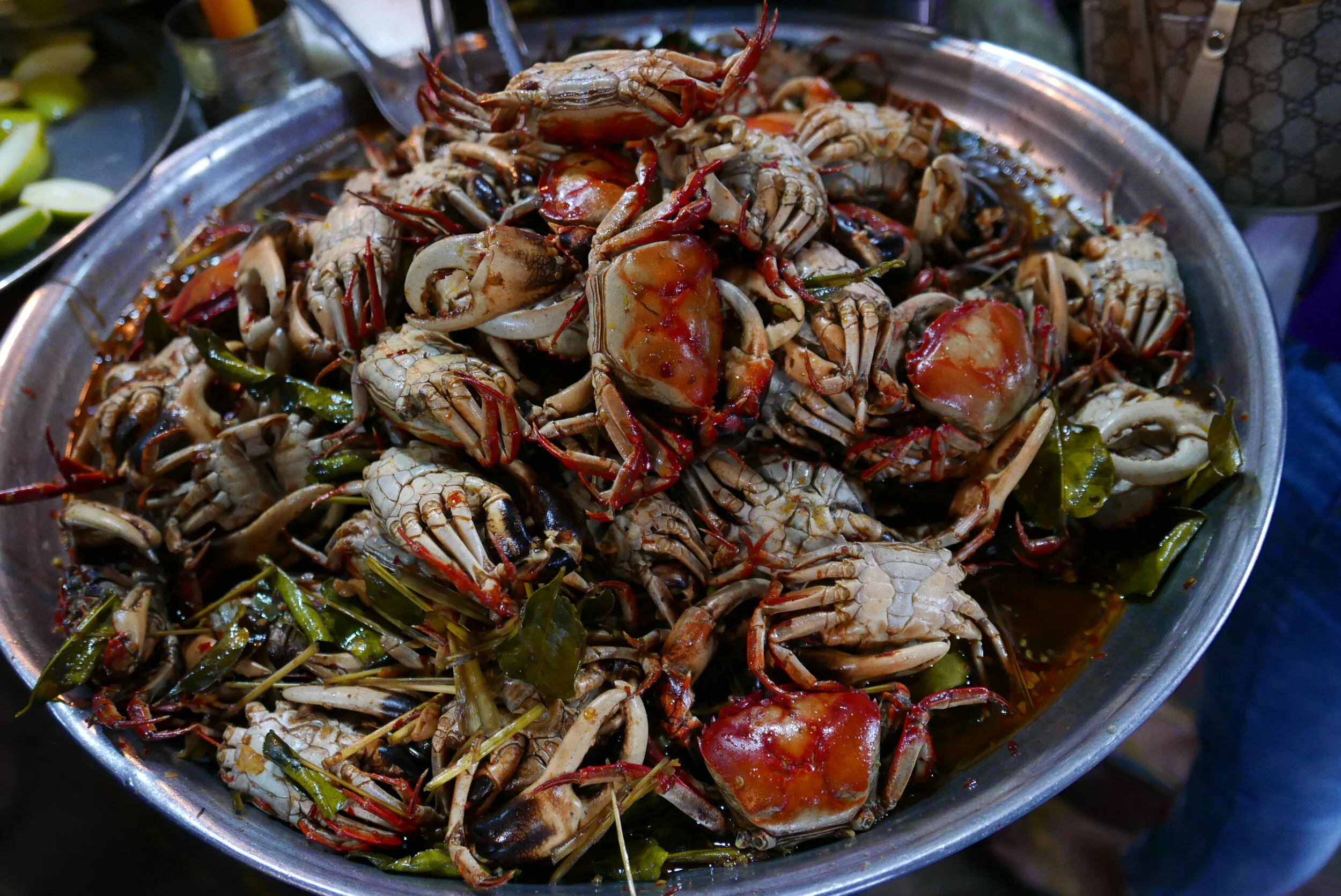
Cambodia - Scratching the surface of the country's food and culture
Honey, a wonderful golden liquid that has a composition of a complex mixture of sugars, water, vitamins, minerals, pollen and protein. It is made by these wonderful little black and yellow foragers known as bees, who collect nectar from flowers (or honeydew) near and far, store it in their honey stomachs (crops) and regurgitate it into the little vessels of the hive. The vessel is then fanned with their wings which leads to water being evaporated and the pure honey remaining.
Cambodia, one of the poorest countries in Southeast Asia is extremely rich in history which has influenced its Khmer cuisine. Almost all of it was lost during the communist regime, however, the essence of its past is still written in the food of today. It goes well beyond the fried bugs, and spiders on skewers at the tourist street food markets, although these food sources are definitely a sign of a resourceful and once starving nation.
The land of Cambodia is extremely rich and fertile where rice flourishes and is today one of Cambodia's most important exports. The Mekong river runs through the country to meet Tonle Sap - the largest freshwater lake within Southeast Asia, allowing freshwater fish and seafood to be extremely abundant.

Cambodia is also home to the largest religious monument in the world, Angkor Wat, taking a good 37 years to build and a complex of other religious temples surrounding it reflecting the cultural and spiritual wealth of the the Hindu-Buddhist Khmer Empire, who was prominent from the 9th - 15th Century.
Read the entire article HERE.
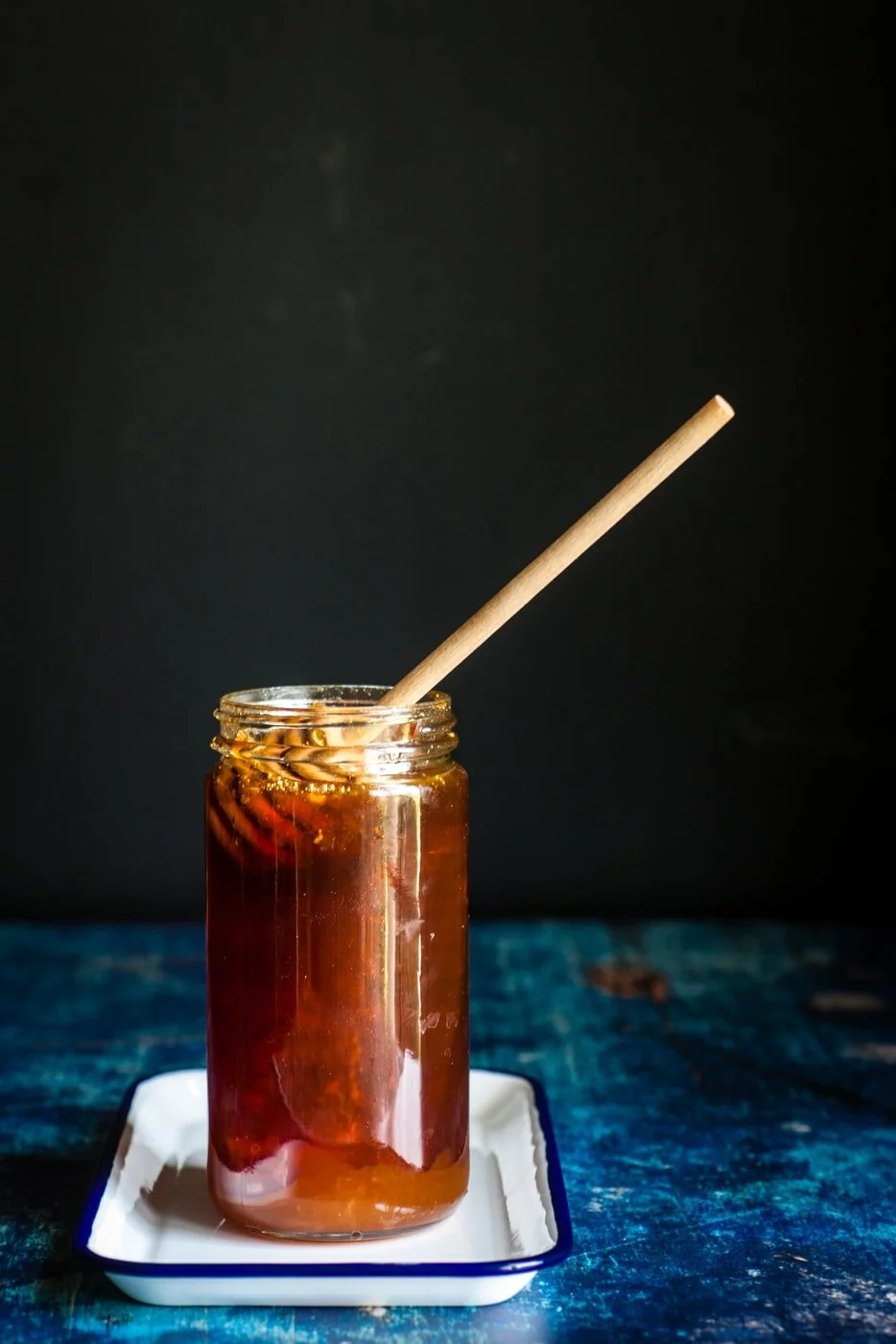
Honey - Nature's Liquid Gold
Honey, a wonderful golden liquid that has a composition of a complex mixture of sugars, water, vitamins, minerals, pollen and protein. It is made by these wonderful little black and yellow foragers known as bees, who collect nectar from flowers (or honeydew) near and far, store it in their honey stomachs (crops) and regurgitate it into the little vessels of the hive. The vessel is then fanned with their wings which leads to water being evaporated and the pure honey remaining.
Honey, a wonderful golden liquid that has a composition of a complex mixture of sugars, water, vitamins, minerals, pollen and protein. It is made by these wonderful little black and yellow foragers known as bees, who collect nectar from flowers (or honeydew) near and far, store it in their honey stomachs (crops) and regurgitate it into the little vessels of the hive. The vessel is then fanned with their wings which leads to water being evaporated and the pure honey remaining.
Bees have been going about their business for more than 100 million years according to fossil evidence of these little creatures that have been preserved in resin. Cave paintings in Spain dating back 8,000 years ago show that humans have relied on bees by raiding their nests and collecting the sweet liquid they produce. The earliest evidence of beekeeping was in Ancient Egypt where hives made of clay from the Nile were placed on rafts that travelled up and down the river depending on the season.
Honey bees, honey and wax were a part of everyday life in the ancient world. The application of honeybees’ by-products was used for culinary purposes, spiritual and religious rituals, embalming, medicinal treatments and even as a currency.

Credit @heather_gill
Honey is classified according to the floral source (monofloral, polyfloral, blend) and by region or country. It can be bought in both its raw form and pasteurized form. Raw honey comes straight from the honeycomb, is mashed and filtered to remove the honeycomb and other debris. Honey in its raw state is unadulterated, containing beneficial health and medicinal properties due to the pollen, propolis, antioxidants, natural vitamins and minerals present. When honey is pasteurized, it results in a smooth clearer liquid and while it is aesthetically pleasing, will contain a loss of vitamins, essential nutrients and minerals.
When choosing honey, it is important to seek out the genuine product, making sure it is pure and contains no added corn syrup, sugarcane or additives.
Honey is such a versatile ingredient and can be used in both sweet and savoury dishes, an additive to drinks, marinades, dressings and even as natural medicine. I’ve used it to make a show-stopping layered cake that can be made a day in advance. It’s known as the Medovik Torte or Russian Honey cake. You can try the recipe HERE.